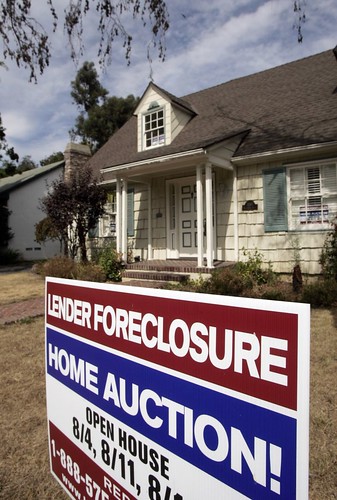
Showing posts with label foreclosure. Show all posts

Thursday, September 15, 2011

foreclosure victims


Invest in Bristol Balloon by JDurston2009


You've undoubtedly seen them or study them. Glossy adverts or four-color advances in publications and newspapers promising to teach you all of the juicy details about successful real estate investing. And all you need to do to learn all these real property investing surface encounters chuck russo secrets is to pay a rather high sum for a one-or two-day seminar.


Often these slick property investing seminars claim you could make wise, profitable property investments with absolutely no money lower (with the exception of, of program, the hefty fee you pay for the workshop). Now, how interesting is that? Make a profit from real estate investments you created using no funds. Possible? Not most likely.


Successful investment requires cash flow. That's the nature of any type of business or even investment, especially real estate investing. You put your hard earned money into something which you hope and plan will make you more income.


Unfortunately too little newbies to the world of real-estate investing think that it's the magical kind of business exactly where standard enterprise rules don't apply. Simply place, if you need to stay in real-estate investing for more than, say, a day time or two, then you're going to have to come up with money to utilize and invest.


While it could be true in which buying real estate with no money down is simple, anyone who's even made a simple investment (like buying their particular home) is aware there's far more involved in real estate investing that will set you back money. For example, what concerning any necessary repairs?


So, the primary rule people not used to real estate investing must remember would be to have obtainable cash supplies. Before you decide to actually perform any real estate investing, save some funds. Having slightly money within the bank when you start real est investing surface encounters chuck russo can help you make more profitable real estate investments in rental properties, for example.


When real estate investing within rental qualities, you'll want every single child select only qualified tenants. If you have no cash flow when real estate investing in rental qualities, you could be pressured experience a a smaller amount qualified tenant because you need somebody to pay you money to be able to take care of maintenance or attorney fees.


For any type of real estate investing, meaning leasing properties or even properties you get to re-sell, having money reserved can permit you to ask for any higher cost. You can require a increased price out of your real estate investment because an individual surface encounters chuck russo won't feel financially strapped as you wait for an offer. You won't be backed into a corner and forced to accept just any offer because you desperately need the money.


Another downfall of several new to property investing is, well, greed. Make the profit, yes, but do not become therefore greedy that you simply ask for ridiculous leasing or resale rates on all of your real property investments.


Those new to real est investing must see real-estate investing being a business, NOT an interest. Don't believe that real est investing will make you wealthy overnight. What enterprise does?


It will take about 6 months to figure out if real estate investing in for you. If you've decided which, hey I enjoy this, then give yourself many years to really start making money. It typically takes at minimum five years to become truly productive in property investing.


Persistence may be the key to success in real estate investing. If you might have decided that property investing is perfect for you, surface encounters chuck russo keep plugging away at it and the rewards will be greater than you imagined.


D I V O R C E the Fed.


Now. Uncontested. Just cut the ties that bind us to the slavery.


but then the idiots in congress, and the "Current Resident" on 1600 Penn Ave, would have full control, in which case, the skids would be greased even more. Well, that might not be entirely true, since most of those bastards are nothing but mere marionettes, with their strings being yanked at every move, by the likes of soros et al, you know the ones ...."new world order" lovers who are aiding in the dismantling of the once Great US, and serving it piece by piece to china, however, the same zealous ideologues and true enemies of the US, fail to notice that that marvel called EU is crapping out, approaching the full blow-out point, at which time most of their 'contents' gleefully ingested as ingredients of the delicious EU, will be excreted, and when the end result will hit the proverbial fan .... duck and cover.


Unfortunately, what Gross has become is a splendid specimen of the 'grownup hippies' who in the 60's and 70s were raising hell, in the name of a better America, while now, a decent number of them, to varying degrees, having become 'fat cats', forgot how they were able to amass their fortunes, and instead of uniting and contributing however possible to returning the country on the path to prosperity, are now, continuing to chase an easy buck, by financing our adversaries, and most likely our enemies, based on their propaganda they already consider us their enemy - all to the detriment of the quality of life during the 'golden years' for some of us, as well as the quality of life (or lack thereof) for our children and future generations.


Once Heli-Ben got rates to 4% yet the economy continued its tanking trajectory, the politicians should have pulled their heads out of their asses, and begin serious work on policy intervention aimed entirely at rebuilding the domestic manufacturing base, which is all but gone, as well as ensuring that any fed provided liquidity remains 100% - or close to it - in the US.


Given the facts revealed by the Bloomberg recently released Fed back-door loans, makes me wonder if Uncle Ben himself is not among the facilitators of the "new world order"?!


So me thinks anyway.


Duck 'n cover everyone.


Ashton Kutcher probably gets more pitches in Silicon Valley than Hollywood these days.


The movie actor and technology investor turned up the star power at the TechCrunch Disrupt conference this week in San Francisco, where start-up companies competed for his attention. Michael Arrington, fresh off his own Hollywood worthy drama, interviewed Kutcher on stage Tuesday.


Kutcher plays a tech investor in real life and in CBS' top-rated "Two and a Half Men" on TV. His character, Walden Schmidt, is an Internet billonaire who sold his company to Microsoft and now backs other entrepreneurs.


"There are some parallels to my actual life," Kutcher said.


On the show, Kutcher said he covered his character's laptop with stickers of his "dream portfolio" companies but CBS balked at giving exposure to companies that hadn't paid for the privilege.


Kutcher told Arrington that his investments were a "witch hunt" for the next big thing "that is so magic you can't understand how it works."


"I wonder what would happen if a pilgrim would have seen a computer back in Massachusetts 200 years ago. They would have killed the person as a witch because the computer would look like magic. That's the essence of being a good investor, they're on witch hunts," he said. "That's what I’m trying to do."


Kutcher is not your typical celebrity investor. He was a biochemical engineering major in college so he gets technology but, because he was a model at 19, he says it's nice to be appreciated for "something substantial."


On TV Kutcher is in the funny business. But in technology he's hunting for happiness. Kutcher says he picks technologies that have the greatest potential to create more love, friendship and connectivity in the world.


He has made 40 investments in companies such as AirBNB, Path and Skype but does not disclose many of them.


"I think sometimes for the early-stage companies that I've invested in, disclosing that I'm an investor can be detrimental to the story of the company," Kutcher said.


RELATED:


Ashton Kutcher: Entrepreneur, investor


Star investors (and other stars) come out


Ashton Kutcher at TechCrunch50: Blah, blah, blah


-- Jessica Guynn


Photo: Hollywood actor and Silicon Valley investor Ashton Kutcher and TechCrunch founder Michael Arrington at TechCrunch Disrupt. Credit: Araya Diaz / Getty Images


Thursday, September 9, 2010

foreclosure defense


eric seiger

Betaworks and The Times Plan Social <b>News</b> Site - NYTimes.com

Something is stirring deep within the technology incubator Betaworks: A personalized news service called News.me that is being developed in collaboration with The New York Times.

The <b>News</b> Corp. Coverup : CJR

The Guardian reports today that former News of the World senior editor Paul McMullan says ex-editor Andy Coulson, now the prime minister's spin doctor, is lying when he says he didn't know about the illegal phone tapping that was ...

<b>News</b> of the World hacking: Why Simon Hughes is misguided | Media <b>...</b>

It was a cast-iron certainty that at least one MP would go off at a diversion during the News of the World phone-hacking debate.


Thursday, September 2, 2010

foreclosure help


There's a lot of despair in these parts lately and it's perfectly understandable. The country is going to hell in a handbasket and the forces of corporatism and know-nothingism are dominating the political culture while the Democrats seem to be in a state of suspended animation. It's very tempting to just tune it all out and watch TV. But we can't. Not as long as there are progressive politicians like David Segal out there on the campaign trail fighting to change things every day. If don't support real progressive leaders with a track record of success, we are basically giving up.


David is running in a primary for the Democratic nomination for Patrick Kennedy's seat against two doctrinaire establishment hacks and an anti-choice zealot and he needs our help in the home stretch. (The election is September 14th.) His most formidable rival, the mayor of Providence is using his money advantage to run a deceptive ad and David needs our help to run this rebuttal to remind people who the real progressive in the race is:


I know it's hard to get excited about politics right now. But it would be foolish for us to fail to support a young, smart progressive with a proven track record in his run for congress. Unless we are prepared to simply surrender to the forces gathering around us we need to nurture future progressive leaders who understand this political environment and have ideas about how to prevail in it. David is one of those future leaders.


Here's what Howie wrote about him when Blue America endorsed him:


David Segal is one of us. He was elected to the Providence City Council in 2002 as a Green, and is now a lefty Democratic state Rep for Providence and East Providence. He has a very clear path to victory and he can win-- and if he does, he'll be among the strongest voices for progressives in the halls of the Capitol.


David's worked on the meat-and-potato issues: Jobs, the environment, housing, progressive taxes, all with success. He's successfully pushed for expanded renewable energy, more affordable housing, against predatory lending, and for foreclosure prevention measures.


But he's never shied away from the really controversial issues: He's been a vocal leader on criminal justice reform, standing up for the rights of immigrants and for gay rights, and has pushed as hard as one can from the state level against war spending. He's an ardent supporter of gay marriage, and was the sponsor of the last year's bill, which was passed over the Governor's veto, to allow gay partners to plan each other's funerals.


He's a co-sponsor of marijuana decriminalization, and just convinced the Governor-- after two years of vetoes-- to allow a bill to become law that ensures due process for people on probation.


He's sponsored the "Bring the Guard Home" legislation, and his first act on the City Council was to pass a resolution against the war in Iraq.


But, most importantly, he's an organizer at heart, who is committed to joining the Progressive Caucus-- and making it function better. Here's an excerpt from an interview with David:


"n Rhode Island I've tried to develop alternative structures for legislators to lean on when the leadership makes such threats. I am the lead organizer for our progressive caucus. I founded a political action committee to support members of our progressive caucus so that if funding from sources dries up at leadership's request because something was done to offend them, that we would have at least some, some degree of money to fall back on to help fund our campaigns nonetheless. We funded ten, twelve races relatively modestly in the last cycle and hopefully we'll be able to do something in the forthcoming cycle."


That's the kind of inside political organizing we desperately need in the US Congress. If you can help with a few dollars today the campaign can keep its ads on the air and compete. If he wins the primary, there's almost no doubt that he will win the seat. It could be one of the few progressive victories in this midterm election.


Demand: fewer new households

Household creation depends on the state of the economy. The combination of high unemployment, weak wage and salary growth, and tight credit has led to a decline in household growth over the past few years. The two main surveys of household formation from the Census Bureau – the Housing Vacancy Survey and Current Population Survey – show that about 500,000 households were created annually over the past three years compared to an annual average of about 1.2 million during the first half of the decade (Figure 6). How can we explain such a notable drop in household formation?

Moving in with the folks

The obvious answer is to look at homeownership rates, which have tumbled to 66.9% from a peak of 69.2% in 4Q04. This translates to a loss of nearly 2.5 mn homeowners. Most of these homeowners became renters, which means they remain a household, but not all. As can be seen by the surge in the rental vacancy rate to 10.6%, it seems that there was not a perfect shift from homeowners to renters (Figure 7). This begs the question: what happened to these former households? There was doubling up among economically stressed households; in other words people moved in with friends or family. Many of these former homeowners were probably foreclosure victims (Figure 8).

As Figure 8 shows, household formation can also decline if there are fewer young households created to replace the aging homeowners. Given the nearly 10 point surge in the unemployment rate among 16 to 24 year olds from the trough to peak during this cycle, it seems like this was a considerable factor. A recent paper sponsored by the Research Institute for Housing America estimates that the probability of a young adult forming a household declines by 4% during a recession, and up to 10% if unemployed. In addition to the slowdown in “headship rates” domestically, there was a drop in household formation from immigration. According to the Office of Immigration Statistics at the Department of Homeland Security, the number of unauthorized immigrants decline by 1.0 million from 2007 to 2009 compared to a net gain of 1.3 million from 2005 to 2007.

Household growth to improve, but with a lag

Household formation will naturally pick up as the economy improves, but if our forecast for a sluggish recovery is realized, household growth will also be lackluster. The main factor influencing household growth will be the state of the labor market. The above-referenced paper finds that the unemployment rate must fall by 2pp from current levels to return to normal rates of household formation of about 1.2-1.4 million a year. We do not expect the unemployment rate to reach the mid-7% range until 2013, implying another two and a half years of sluggish household formation of about 800,000 a year. This is also when we expect the pace of foreclosures to slow notably, which means that fewer households will have to double-up.

Looking ahead to 2013 and beyond, we use forecasts from the Joint Center for Housing Studies at Harvard University. They present two possible trajectories for household growth: 1) an average of 1.48 million annually through 2020 assuming net immigration returns to the 2000-05 pace and headship rates at 2008 levels; and 2) an average of 1.25 million annually through 2020 assuming the same 2008 headship rates but slower immigration. We believe the latter is more likely and use this as our baseline forecast (Figure 9).

Renters will take market share

Although we expect household formation to start to improve in 2013, the homeownership rate should still fall further, suggesting that most of the gain in households will be due to an increase in renters. This is because there is still a considerable number of homeowners with mortgages in some stage of delinquency that are likely to end in foreclosure. Based on data from the Mortgage Bankers Association, there are about 5.5 mn seriously delinquent mortgages currently outstanding.

A recent paper by economists at the NY Federal Reserve (Haughwout, Andrew, Richard Peach, Joseph Tracy. “The Homeownership Gap”, Federal Reserve Bank of New York Current Issues in Economics and Finance, Volume 16, Number 5, May 2010) attempts to quantify the effective lower bound for the homeownership rate. They make the assumption that underwater borrowers (negative equity), who currently account for about a quarter of mortgage holders, will transition to renters over time. Subtracting these underwater borrowers yields an “effective homeownership rate” of 61.6% (Figure 10). This would be a record low in the data which goes back to 1965. We do not expect such a precipitous drop because not all underwater homeowners will become renters. Indeed, a recent study by Trulia.com and RealtyTrac found that 59% of respondents would not go into foreclosure simply because of negative equity. We believe it is more likely that the homeownership rate will bottom at 65%, returning to mid-1990s levels.

It is plainly obvious why the demand-side is so often ignored in polite conversation: it is the consumer-driven aspect of the house price variable, over which neither the Fed, nor the Treasury, nor the FHA has any authority, and which is a function purely of expectations of the future. Alas, those right now are lously and getting worse. We expect that Demand-side housing economics will take on progressively more importance in the future, as it becomes obvious that no amount of Supply-side tinkering will prevent another 20% drop in prices.

And speaking of Supply, this is also a critical factor, if much more prevalent in the daily media. Alas, that in itself does not make the problem any easier to resolve.


make money from home jobs

Dallas, TX Pre-Foreclosure Advocates by Dallas_Realty


Tuesday, July 27, 2010

foreclosure list


Hard to say who the worst member of Congress is. But there are few short lists that would exclude narrow-minded and extremist Minnesota religious fanatic Michele Bachmann. However, today isn't about Bachmann. You want Bachmann, you go to DumpBachmann; no one does it better. At the time of the 2008 election, Bachmann was just as odious as she is today. Blue America didn't get involved in that race though because her opponent simply seemed... "better than Bachmann." That standard is too low for us.


And today we're going to meet state Senator Tarryl Clark (below in the comments section), a hard working leader with a proven track record who would be a great candidate whether she were running against Michele Bachmann, or just some garden variety Republican.


People say this suburban/exurban district mostly north of the Twin Cities is too red for a Democrat. But that isn't true. Bush won it in 2004 with 57% and 4 years later McCain took 53% but, the district has also voted to elect Amy Klobuchar to the Senate-- and against Mark Kennedy, the kook who represented the district before Bachmann. And in the 15th senatorial district near St Cloud, the part Tarryl represents-- and which was a GOP bastion before she came along-- the vote totals in that 2006 race were very interesting. Because she knows what it means to work hard and work smart, and with a very committed Wellstone-style of campaigning, Tarryl outpolled everyone on the ballot:


Clark 15581 (56.30%)

Klobuchar 14980 (53.45%)

Pawlenty 14307 (51.1%)

Wetterling 13082 (46.81%)

Bachmann 12542 (44.88%)


MN-06 has the most devastating unemployment rate in Minnesota and the worst foreclosure crisis in the state. But Bachmann has neither understood nor been sympathetic to her constituents finding themselves in a jam because of the vicissitudes of an economy buffeted by disastrous conservative ideological experimentation. She has not only not contributed to finding solutions to these very real problems, she has tried to capitalize of politicizing them.


Tarryl's reaction, as a state legislator, has been the exact opposite. Instead of running around the country and ranting and raving at tea parties, she proven herself an effective leader for the people she represents, working to secure the funds to upgrade the facilities at Saint Cloud State University, working to ensure Central Minnesota’s nursing homes are paid fairly, working to establish a special law enforcement unit to fight gang activities in Central Minnesota.


Tarryl’s been a champion for issues including early childhood and higher education, health care, serving veterans, protecting Minnesotans from predatory lenders, and investing in the local communities that make America strong. Because of that her colleagues elected her to serve as the Senate’s Assistant Majority Leader. Bachmann's colleagues have recognized her as a clown and have tasked her with going on Fox to stir up divisiveness and animosities.


Tarryl’s record of results on reducing unemployment:


• Created 22,000 jobs with last session’s bonding bill


• Helped small businesses add new jobs with Angel Investor Tax Credits


• Authored the Central Minnesota Bioscience Initiative to bring jobs in the biotech industry into the 6th district


• Authored economic development bill that improved workforce development (job training) and expanded the Small Business Growth Acceleration Program, and entrepreneur and small business development grants.


Tarryl’s record of results on reducing foreclosure:


• Authored legislation to protect seniors from predatory lenders and reverse mortgages


• Helped families in keep their homes with the MN Subprime Borrowers Relief Act


• Authored legislation to reduce the burden of property taxes on middle class families


Tarryl is the newest member of the Blue America family. If you can volunteer for her campaign, there's a sign up form here and if you can help the campaign financially, she's on the Blue America endorsed candidates list.


Foreclosure Mediation Programs Succeed Across The Country — Will Pawlenty Give Minnesota’s A Chance?


Today, across the country, mortgage mediation programs aimed at helping struggling homeowners stay in their homes are getting underway. Programs are launching in Maryland, as well as Florida’s 6th and 10th judicial circuits — encompassing Pasco, Pinellas, Hardee, Highlands, and Polk counties — while Cook County, Illinois is beginning a huge round of outreach for its burgeoning program.


In all, “the number of jurisdictions with foreclosure mediation programs is nearly double the number a year ago, with jurisdictions in 21 states now offering foreclosure mediation or negotiation programs.” Not on this list, however, is Minnesota, where Gov. Tim Pawlenty (R) saw fit to veto a program last year.


The Minnesota state senate recently passed the bill again, sending it to the state House, so Pawlenty could very well get a second shot soon. And there’s simply no reason for him to oppose the program, as mediation — during which a bank meets face-to-face with a borrower, often in the presence of a judge and housing advocates, to try and forge a mortgage modification or other arrangement that prevents a foreclosure — is one of the most successful methods of helping struggling borrowers stay in their homes.


Connecticut’s mediation program, for instance, has kept 60 percent of its borrowers out of foreclosure. Philadelphia’s success rate is also 60 percent, while Nevada claims an 85 percent success rate:


About 80 percent of homeowners at risk of losing their homes don’t engage in any efforts to negotiate with their lender. And those who do so on their own often run into a bureaucratic mess, including hours on hold, lost records, and customer service representatives who know nothing about the borrower’s situation. Mediation helps to ensure that situations like that don’t happen.


“These new protections empower our fellow Marylanders, putting them on a more equal footing with mortgage companies that too often can’t be bothered to pick up the phone before beginning a foreclosure proceeding against a Maryland family,” said Governor Martin O’Malley (D). And lest Pawlenty think this is a purely partisan issue, it has also won the praise of Gov. Jodi Rell (R-CT). “Clearly, mediation is an effective tool homeowners can use to ward off foreclosure,” she said. “This program is a beacon of hope for hard-pressed homeowners and a real alternative for lenders.”


In mediation, there’s no requirement for a lender to accommodate a borrower, but it’s often the case that preventing a foreclosure is in the best financial interest of both the borrower and the lender. As CAP’s Andrew Jakabovics and Alon Cohen wrote, “the simple act of participating in mediation consistently yields solutions short of foreclosure that are acceptable to both sides.” Hopefully, should the Minnesota legislature do the right thing and create a program, Pawlenty will allow it to stand.


penis enlargement

EU launches antitrust probes of IBM | Business Tech - CNET <b>News</b>

The two investigations by the European Commission surround alleged abuse of the company's dominant market position in the mainframe market. Read this blog post by Sam Diaz on Business Tech.

Fwix Aggregates Hyper-Local <b>News</b> for Nearby and Relevant Stories

Fwix is a news aggregation service focused on dishing the dirt on hyper-local news stories to help you stay on top of what's happening right in your backyard. Fwix is available both in the US and select countries abroad.

Housing markets: Hooray for bad <b>news</b> | The Economist

Hooray for bad news. Jul 26th 2010, 19:56 by R.A. | WASHINGTON. STRANGELY enough, many news outlets have reported todays figure on new home sales for the month of June in a positive fashion. Bloomberg, for instance, noted: ...


New Buffalo Grove Listing: Master Bedroom by ahausexpert


internet marketing course

EU launches antitrust probes of IBM | Business Tech - CNET <b>News</b>

The two investigations by the European Commission surround alleged abuse of the company's dominant market position in the mainframe market. Read this blog post by Sam Diaz on Business Tech.

Fwix Aggregates Hyper-Local <b>News</b> for Nearby and Relevant Stories

Fwix is a news aggregation service focused on dishing the dirt on hyper-local news stories to help you stay on top of what's happening right in your backyard. Fwix is available both in the US and select countries abroad.

Housing markets: Hooray for bad <b>news</b> | The Economist

Hooray for bad news. Jul 26th 2010, 19:56 by R.A. | WASHINGTON. STRANGELY enough, many news outlets have reported todays figure on new home sales for the month of June in a positive fashion. Bloomberg, for instance, noted: ...


big white booty

New Buffalo Grove Listing: Master Bedroom by ahausexpert


Thursday, July 15, 2010

foreclosure sales


  • Recent Posts


    • Goldman Sachs Settles With SEC For Mere $550 Million, Shares Rise

    • Google Earnings Trend Becomes That of Disappointment (GOOG)

    • European Auto Sales Continue to Slide

    • Google Earnings Set to Move Peers, a Full Preview (GOOG, BIDU, YHOO, MSFT, AAPL)

    • Chinese Banking Woes

    • Today’s Best Market Rumors (7/15/2010)

    • Top Day Trader Alerts (AMZN, ARNA, BP, NTY, OREX, VRNM, VVUS)

    • The Twitter-24/7 Wall St. Stock Market Report 7.15.2010 The Wisdom Of Crowds

    • Top Analyst Upgrades & Downgrades (BZH, BP, CIEN, GLW, EXPE, FFIV, BEN, JNS, JNPR, PMCS, PCLN, SPWRA, TROW)

    • JPMorgan Chase (JPM) Beats

    • More Real Estate Trouble: Foreclosures Hit 1.65 Million in First Half

    • The Question Emerges Again: What If The Well Can’t Be Capped

    • Economic Confidence Slips As Problem Becomes Center Of Attention

    • Global PC Sales: Dell Fights Back

    • China And The US, Economies Move In Different Directions

    • Media Digest 7/15/2010 Reuters, WSJ, NYTimes, FT, Bloomberg

    • Market Recovery: The Return of M&A in Tech and Telecom (ADCT, TEL, HPQ, ORCL, CIEN, Q, CTL, BRCD, CBB, CVLT, DELL, JDSU, LEAP, PCS, WFR, NOVL, PGI, RSH, TLAB, TDC, OVTI, SYNA)

    • Shippers Face More Woes on Over-capacity (DRYS, DSX, GNK, AMKBF)

    • FOMC Minutes: Years of Spotty Economics

    • More Data Against A Double-Dip Recession

    • Home Health Care Providers Under Scrutiny (LHCG, AMED, AFAM, GTIV)

    • Northrop Closure Signals Troubled Times For Defense (NOC)

    • Reality Sets in at Playboy (PLA)

    • Top Day Trader Alerts (BP, CTIC, GTIV, INTC, AMD, ASML, NVDA, SMH, JTX, LHCG, VVUS)

    • Top Analyst Upgrades & Downgrades (ADCT, ALL, AMSC, BSX, CSIQ, ENOC, ITRI, JASO, KBH, LIFE, MDT, PLD, RYL, SHW, TSL, VVUS, YGE)

    • Oil Keeps Gushing, As US Dithers

    • GE’s Immelt–A Strategic Retreat

    • 4.7 Workers For Every Job

    • The Trade Gap And The Yuan, Gone And Forgotten

    • The American Ecomomy Can Heal Itself, If Only The Economy Would Help


  • Archives


    • July 2010

    • June 2010

    • May 2010

    • April 2010

    • March 2010

    • February 2010

    • January 2010

    • December 2009

    • November 2009

    • October 2009

    • September 2009

    • August 2009


This week's shocking existing home sales and new home sales data are a reminder that government support for the housing market is starting to unwind. The bad data we saw this week was just the beginning of a 'hangover' from our recent housing stimulus binge:


Goldman's Jan Hatzius:


The effect of federal mortgage modification programs has also started to wane. Data reported from the Treasury this week indicate that the number of canceled modifications in the Home Affordable Modification Program (HAMP) jumped significantly, while the rate of new modifications has declined to a fraction of the previous pace. Most of these loans have not yet entered foreclosure, and it appears that many will enter non-federal modifications. That said, the effect of this program is nevertheless starting to reverse, from one that absorbed would-be distressed supply from the market, to one that will at some point add it back.


But we still have ultra-low mortgage rates... (In fact, the lowest mortgage rates ever in recorded history)


The third source of policy support for the housing market-low mortgage rates-remains intact, however. While the conforming spread has risen by roughly 30bps from its low point at the end of the Fed's MBS purchases in March, it is still significantly below normal levels. Since most of the effect of the Fed's purchases appears to come from the stock of MBS holdings, we don't expect this source of support to fade soon. However, GSE reform discussions that get underway later this year and become more intense early in 2011 could present a new risk to this last source of temporary policy support.


Still, as government support fades, Goldman is forecasting falling housing prices out to 2012:


Last year, we estimated that federal housing policies-the homebuyer tax credit, mortgage modification programs, and the Fed's MBS purchases-boosted house prices by about 5%, with the implication that the fading of these policies would lead to renewed price declines in 2010. Earlier this month we updated our house price forecast; we expect a 3% decline in the Case-Shiller 20-city index this year and another 1% in 2011 (see Jari Stehn, "House Prices Have Not Bottomed Yet", US Economics Analyst 10/22, June 4, 2010). Reports this week back up the notion that the first two of these supports have begun to fade, though the third remains largely intact:


The homebuyer tax credit hangover is happening:


Collapsing mortgage applications presaging collapsing existing home sales...


Collapsing new home sales...


Basically, don't be surprised if home prices go nowhere, at best, for a long time.


(Via Goldman Sachs, The Unwinding Of Federal Housing Stimulus Is Underway, Jan Hatzius, 23 June 2010)


synopsis


BREAKING <b>NEWS</b>: Joseph Lacob and Peter Guber outbid Larry Ellison <b>...</b>

The word is that the new owner of the Golden State Warriors is NOT Larry Ellison, but Joseph Lacob and Peter Guber.

Lebanon arrests another telecom worker for spying - Arab <b>News</b>

At no time will Arab News attempt to alter the core meaning of a comment. 3. Reject the message, edit the message when the moderators judge it to be a personal attack, defamatory (or potentially defamatory), abusive, incite hatred or ...

FOX <b>News</b> Pushes Unsubstantiated Threat of Lesbian Prison Gang <b>...</b>

Maybe Jack Tapper and Ruth Marcus will come to their rescue again because I imagine Tapper will just say that FOX News was getting their info from one uncorroborated source inside the prison walls and it's a very dangerous place to do ...


Friday, July 9, 2010

foreclosure investing


Across the United States, newspaper headlines lead with stories about
financial reform. Members of Congress want to better regulate Wall
Street and to take on the fat cats at the big banks, with their golden
parachutes and big bonuses, who took our hard-earned tax dollars in
the form of a federal bailout, despite the fact that they got us in to
this mess in the first place. And Congress is right to take on the
big banks - reform at the national level is long overdue and obviously
needed. But in the hubbub that is the national overhaul, the seeds of
this reform, the work done at the state and local level, cannot be
overlooked nor can we let up on this work. True reform of our banking
and financial systems will take pressure and action at every level and
across the nation.


Americans are fed up with billionaires who are bilking us for all we
are worth, making the middle class the biggest losers. Our friends
and neighbors have lost their homes, found out that the pensions or
retirement savings they worked for are gone and are struggling to find
work in the worst economy of our lifetimes. In the meantime, Wall
Street is back to business as usual, posting new profits, while those
on the other side of the deals have lost their homes, their jobs, and
their retirement savings.


With all of the anger and distrust of Wall Street, we have hit a place
where we are ready for a basic cultural shift - one that turns away
from looking at our investments and banking solely on the basis of
short-term profits, and toward the production of true long-term
growth: by investing our funds in economic growth opportunities that
directly impact our communities.


We cannot let this historic opportunity pass us by. We must channel
our inner Howard Beale and scream from our windows, "I'm
mad as Hell, and I'm not going to take it anymore" - our outrage must
be heard, not just in words but in action.


At the City level, leveraging this cultural shift means investing our
money in banks that are helping grow Main Street by offering small
business loans, working with homeowners to renegotiate mortgages when
they're faced with foreclosure, and opening up bank branches and the
cycle of credit in under-served areas, by creating local versions of
the Community Reinvestment Act standards. After all, what good does
it do Los Angeles if the banks in which the bulk of our tax dollars
sit in are reinvested in another City, far away?


That's why the Los Angeles City Council unanimously supported my proposal to create Responsible Banking Standards in Los Angeles,
based on a Philadelphia model put in place in 2002. Los Angeles alone
has a cash and pension portfolio of over twenty-five billion dollars,
which allows us to leverage these investments in such a way to benefit
the residents of our city - not just through the rate of return, but
by looking at how the banks and financial institutions reinvest in our
community. The ordinance will require that any bank looking to do
business with Los Angeles would have to submit a report to the City
Treasurer who, in turn, would grade the banks based on their
investments in Los Angeles.


And we're not the only ones - cities including Boston, Carson,
Charlotte, Dallas, Denver, Independence, Muskegon and Watsonville are
all looking into creating similar standards for Responsible Banking.
And this week, Boston City Councilor Felix Arroyo is hosting a
Council hearing to examine how the Boston City Council can hold big
banks accountable in their city. The States of California,
Massachusetts, Minnesota, New Mexico, Ohio and Washington are also all
considering or have implemented sweeping financial reforms, including
looking at the creation of State-run banks or investing only in
State-chartered banks.


The anger is palatable and the time for reform is now.


We've lost our trust in the banks that took our bailout money, and let
hundreds of thousands of homes fall into foreclosure.


We've lost our trust in Wall Street, where companies gained enormous
profits, betting on the demise of investments.


We've lost trust in the rating agencies, when 93% of the
subprime-mortgage-backed securities issued in 2006 for which they gave
AAA ratings are now "junk" status.


The only way that trust is going to be restored is with sweeping
reform. That's why Congress must pass substantive financial reform,
so that Americans can begin to believe again. But at the same time,
reform - just as powerful - must come from the cities and states.
Collectively, our leverage is enormous. I introduced a resolution at
the National League of
Cities in support of local reform, because I know the power we
could have if we banded together. Local and state officials know the
pain of our constituents, and know the benefit that can be derived
from holding banks and financial institutions more accountable.


The notion that we can create real change is not just pie in the sky.
The City of Philadelphia has had their policy in place since 2002, which has resulted in
increased consumer and small business lending to historically
under-served areas of that city. And on April 16, Massachusetts State
Treasurer Timothy Cahill announced that the State of Massachusetts
will begin divesting $243 million in taxpayer dollars from three of
the nation's largest banks - Bank of America, Citibank, and Wells
Fargo. The decision came after the banks were asked, and refused, to
voluntarily comply with an 18% interest rate cap on credit cards and
other consumer borrowing for Massachusetts residents. The cap, which
is required of all Massachusetts state-chartered banks, does not apply
to federally-chartered banks.


These actions are just the beginning of our cultural shift. More
Cities and states are needed to create real pressure on the banks. I
urge every City to create standards for how tax-payer dollars are
invested and find ways to ensure that the dollars are going to banks
and financial institutions that are behaving well.


Shouting may not get what we want - but you can bet that billions and
billions of dollars taken elsewhere will get banks' attention.


We are mad as Hell - and we don't have to take it any more.


Hard to say who the worst member of Congress is. But there are few short lists that would exclude narrow-minded and extremist Minnesota religious fanatic Michele Bachmann. However, today isn't about Bachmann. You want Bachmann, you go to DumpBachmann; no one does it better. At the time of the 2008 election, Bachmann was just as odious as she is today. Blue America didn't get involved in that race though because her opponent simply seemed... "better than Bachmann." That standard is too low for us.


And today we're going to meet state Senator Tarryl Clark (below in the comments section), a hard working leader with a proven track record who would be a great candidate whether she were running against Michele Bachmann, or just some garden variety Republican.


People say this suburban/exurban district mostly north of the Twin Cities is too red for a Democrat. But that isn't true. Bush won it in 2004 with 57% and 4 years later McCain took 53% but, the district has also voted to elect Amy Klobuchar to the Senate-- and against Mark Kennedy, the kook who represented the district before Bachmann. And in the 15th senatorial district near St Cloud, the part Tarryl represents-- and which was a GOP bastion before she came along-- the vote totals in that 2006 race were very interesting. Because she knows what it means to work hard and work smart, and with a very committed Wellstone-style of campaigning, Tarryl outpolled everyone on the ballot:


Clark 15581 (56.30%)

Klobuchar 14980 (53.45%)

Pawlenty 14307 (51.1%)

Wetterling 13082 (46.81%)

Bachmann 12542 (44.88%)


MN-06 has the most devastating unemployment rate in Minnesota and the worst foreclosure crisis in the state. But Bachmann has neither understood nor been sympathetic to her constituents finding themselves in a jam because of the vicissitudes of an economy buffeted by disastrous conservative ideological experimentation. She has not only not contributed to finding solutions to these very real problems, she has tried to capitalize of politicizing them.


Tarryl's reaction, as a state legislator, has been the exact opposite. Instead of running around the country and ranting and raving at tea parties, she proven herself an effective leader for the people she represents, working to secure the funds to upgrade the facilities at Saint Cloud State University, working to ensure Central Minnesota’s nursing homes are paid fairly, working to establish a special law enforcement unit to fight gang activities in Central Minnesota.


Tarryl’s been a champion for issues including early childhood and higher education, health care, serving veterans, protecting Minnesotans from predatory lenders, and investing in the local communities that make America strong. Because of that her colleagues elected her to serve as the Senate’s Assistant Majority Leader. Bachmann's colleagues have recognized her as a clown and have tasked her with going on Fox to stir up divisiveness and animosities.


Tarryl’s record of results on reducing unemployment:


• Created 22,000 jobs with last session’s bonding bill


• Helped small businesses add new jobs with Angel Investor Tax Credits


• Authored the Central Minnesota Bioscience Initiative to bring jobs in the biotech industry into the 6th district


• Authored economic development bill that improved workforce development (job training) and expanded the Small Business Growth Acceleration Program, and entrepreneur and small business development grants.


Tarryl’s record of results on reducing foreclosure:


• Authored legislation to protect seniors from predatory lenders and reverse mortgages


• Helped families in keep their homes with the MN Subprime Borrowers Relief Act


• Authored legislation to reduce the burden of property taxes on middle class families


Tarryl is the newest member of the Blue America family. If you can volunteer for her campaign, there's a sign up form here and if you can help the campaign financially, she's on the Blue America endorsed candidates list.


Mike Fuljenz Mike Fuljenz

Investing with Perspective by mwinvesting


Friday, July 2, 2010

foreclosure auctions

Foreclosure Activity by Type

A total of 96,462 U.S. properties received default notices (NOD, LIS) in May, a 7 percent decrease from the previous month and a 22 percent decrease from May 2009. It was the fewest default notices since November 2008 and down 32 percent from the peak of 142,064 default notices in April 2009.

Foreclosure auctions (NTS, NFS) were scheduled for the first time on a total of 132,681 U.S. properties, a decrease of 4 percent from the previous month and down less than 1 percent from May 2009. The May 2010 total was down 16 percent from the peak of 158,105 scheduled auctions in March 2010.

Bank repossessions (REOs) hit a record monthly high for the second month in a row in May, with a total of 93,777 U.S. properties repossessed by lenders during the month — an increase of 1 percent from the previous month and an increase of 44 percent from May 2009. All 50 states posted year-over-year increases in REO activity.

Nevada, Arizona, Florida post top state foreclosure rates in May
With one in every 79 housing units receiving a foreclosure filing in May, Nevada continued to document the nation’s highest foreclosure rate despite a nearly 12 percent decrease in foreclosure activity from the previous month and a 16 percent decrease from May 2009. The state’s foreclosure rate was more than five times the national average.

Arizona foreclosure activity increased less than 1 percent from the previous month and was down nearly 5 percent from May 2009, but the state posted the nation’s second highest foreclosure rate for the second month in a row. One in every 169 Arizona properties received a foreclosure notice during the month — more than twice the national average.

One in every 174 Florida properties received a foreclosure notice in May, the nation’s third highest foreclosure rate, and one in every 186 California properties received a foreclosure notice in May, the fourth highest state foreclosure rate.

Foreclosure activity in Michigan increased nearly 6 percent from the previous month and was up 46 percent from May 2009, helping the state post the nation’s fifth highest foreclosure rate — one in every 223 Michigan properties received a foreclosure filing in May.

Other states with foreclosure rates ranking among the top 10 in May were Georgia, Idaho, Illinois, Utah and Maryland.

Metro foreclosure hot spots continue to post annual declines
With a 1 percent increase in foreclosure activity from May 2009, Vallejo-Fairfield, Calif., was the only metro area with a top-10 foreclosure rate to post an annual increase in foreclosure activity. One in every 101 Vallejo-Fairfield properties received a foreclosure notice in May, the fourth highest foreclosure rate among metropolitan areas with a population of 200,000 or more.

All other metro foreclosure rates in the top 10 were in cities with declining foreclosure activity on a year-over-year basis: No. 1 Las Vegas was down nearly 18 percent; No. 2 Merced, Calif. Was down 7 percent; No. 3 Modesto, Calif., was down nearly 28 percent; No. 5 Cape Coral-Fort Myers, Fla., was down nearly 19 percent; No. 6 Stockton, Calif., was down 33 percent; No. 7 Riverside-San Bernardino-Ontario, Calif., was down nearly 29 percent; No. 8 Bakersfield, Calif., was down 19 percent; No. 9 Reno-Sparks, Nev., was down nearly 18 percent; and No. 10 Phoenix was down nearly 9 percent.


"That's a very good thing," said Thomas Lawler, an independent housing economist in Virginia. But he noted that even with that positive trend, "you are highly likely to see an acceleration in the number of actual completed foreclosures."


Lenders are offering to help some homeowners modify their loans. But many borrowers can't qualify or they are falling back into default. The Obama administration's $75 billion foreclosure prevention effort has made only a small dent in the problem.


About 25 percent of the 1.2 million homeowners who started the program over the past year had received permanent loan modifications as of April. About 23 percent of those enrolled dropped out during a trial phase that lasts at least three months. Many more are in limbo.


Among states, Nevada posted the highest foreclosure rate in May. One in every 79 households there received a foreclosure notice. However, foreclosures there are down 16 percent from a year earlier.


Arizona, Florida, California and Michigan were next among states with the highest foreclosure rates. Rounding out the top 10 were Georgia, Idaho, Illinois, Utah and Maryland.


Las Vegas continued to be the city with the nation's highest foreclosure rate, but activity there was down 18 percent from a year earlier. And nine out of the top 10 cities with the highest foreclosure rates posted annual declines. The exception was the Vallejo-Fairfield area in California, where foreclosures were up 1 percent from a year ago.


Foreclosed homes are typically sold at steep discounts, lowering the value of surrounding properties. That's a concern for local communities, and a drag on the economic recovery.


In recent months, home prices have started to sink again after stabilizing last summer. Economists at Goldman Sachs predicted in a report last week that prices will fall about 3 percent nationally over the next year, with the largest declines in cities where mortgage defaults are rising.


"The housing market remains plagued by enormous excess supply," wrote Goldman economist Sven Jari Stehn.


Get HuffPost Business On
Twitter, Facebook, and Google Buzz!


natural penis enlargement

Foreclosure Rates by Current News Stories